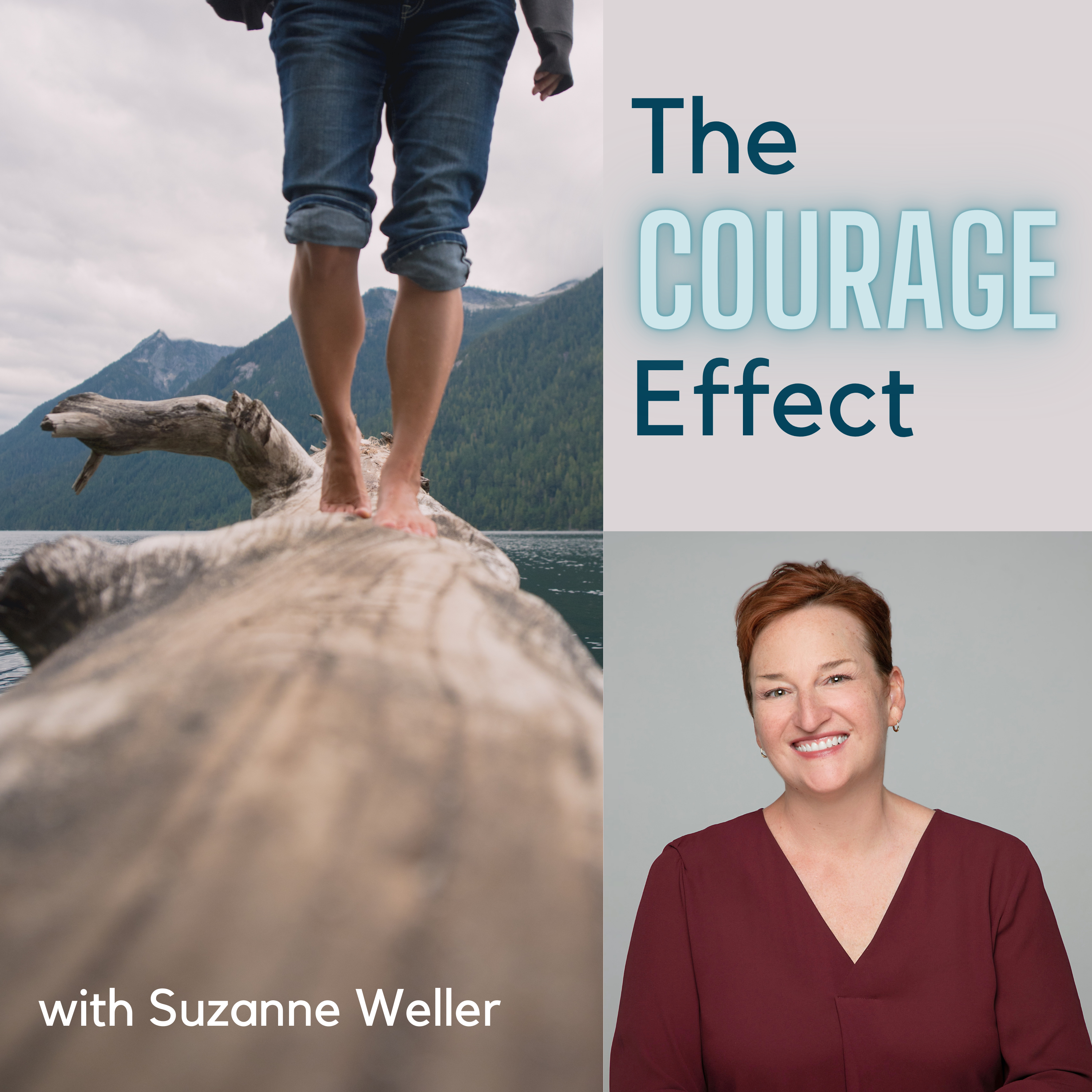
What Do You Know To Be True?
"What Do You Know To Be True?" is a series of conversations with ordinary people about their extraordinary talent and the meaningful impact it has on others. The invitation is to be inspired to discover your superpower, unlock your potential and possibilities, and make meaningful impact in the world.
The journey to unlocking one’s potential and possibilities includes a discovery and deepening of understanding of the building blocks of human potential: purpose, joy, hope, adaptability, well-bring, courage, and community.
Our host, Roger Kastner, seeks to discover more about our guests' path to discover their superpower and unlocking their potential by exploring their journey and the insights and wisdom they learned along the way.
The goal of these conversations is not to try to emulate it or “hack” our way to a new talent. Instead, these conversations are meant to help us think deeply about our own special talents, how we discovered them, why we continue to develop them, and what it’s like to use them to create meaningful impact in service of others.
This podcast is for people leaders, coaches, org development practitioners, mentors, and anyone who works with other people in their pursuit of unlocking their potential and achieving more.
Our guests bring humility, vulnerability, gratitude, and humor as they delve deep into their experiences and share their insights and wisdom. A common thread in these conversations is how our guest use empathy, curiosity, and connection to amplify the impact of their superpowers. They are ordinary people, with extraordinary talent, who make a meaningful impact in our world.
Enjoy the conversations!
#DiscoverYourSuperpower #UnlockYourPotential #MakeMeaningfulImpact
What Do You Know To Be True?
Why Creativity Is Your Birthright | Insights from Pia Mailhot-Leichter
In this conversation, Pia Mailhot-Leichter, shares the pivotal moment she discovered her superpower of "unleashing creativity to make a better world," and how we can use our creativity to unlock our potential and our possibilities to make meaningful impact in our lives and the lives around us.
Pia Mailhot-Leichter, a creative force for good, believes that creativity is our birthright. And while creativity requires us to choose trust, bravery, and vulnerable, when we accept creativity as a way of life, we can change the world.
➡️ What is your relationship with creativity?
➡️ Do you think of yourself as a creative person?
➡️ Is creativity something you do, or do you believe creativity is something innate to who you are?
Dive in, trust the process, Pia will help you find your answers.
Pia joins the conversation to share her superpower of "unleashing creativity to make a better world."
Pia is the founder of Kollektiv Studio where she is a creative partner to clients. She is also the author of the award-winning “Welcome to the Creative Club.”
Pia has been in creative spaces her whole life, but it was a breakthrough moment, not a breakdown moment, where she realized creativity is not just a thing she did…but it was a choice and a way of life.
That is when she chose to change the world by changing the world in her.
In previous conversations, people have talked about creativity as a way to access more joy, which I believe is true, and yet Pia shares that creativity is not always about rainbows and puppies, but like all meaningful and powerful experiences in life, it takes courage, vulnerability, and a leap of faith.
And, as Pia says, it takes giving yourself a “permission slip to suck.”
Pia shares her not-so-secret-now that giving yourself the permission slip to suck will actually free you up to do your most creative work.
In this episode, Pia answers the following questions:
- What is the true meaning of creativity?
- How do I know if I’m creative?
- What does it take to be creative?
- What skills improve my creativity?
My favorite quote from the episode: “Creativity changed the world in me when I redefined what the word creativity meant for me in my life.”
I shared the line from U2’s Rejoice, “I can’t change the world but I can change the world in me,” with Pia and she took off running with it. Although she had grown up in creative spaces, it took a breakthrough moment for her to unfold, honor, and unleash the creativity within herself. And now she is changing the world, from an inside out perspective, by using her superpower to help others embrace and unleash their creativity.
Resources mentioned in the episode:
- Pia’s Company: Kollektiv Studio
- Pia’s LinkedIn:
Music in this episode by Ian Kastner.
"What Do You Know To Be True?" is a series of conversations where I speak with interesting people about their special talent or superhero power and the meaningful impact it has on others. The intention is to learn more about their experience with their superhero power, so that we can learn something about the special talent in each of us which allows us to connect more deeply with our purpose and achieve our potential.
For more info about the podcast or to check out more episodes, chick here.
"What Do You Know To Be True?" is hosted by Roger Kastner, is a production of Three Blue Pens, and is recorded on the ancestral lands of the Duwamish and Suquamish people. To discover the ancestral lands of the indigenous people whose land you may be on, go to: https://native-land.ca/
Keywords
#discoveryoursuperpower #unlockyourpotential #unlockyourpos
TRANSCRIPTS: Why Creativity Is Your Birthright - Pia Mailhot-Leichter
Keywords
#discoveryoursuperpower #unlockyourpotential #unlockyourpossibilities #MakeMeaningfulImpact
Roger: So what is your relationship with creativity? Do you think of yourself as a creative person? Is creativity something you do or do you believe creativity is something that is innate to who you are? In this conversation, I speak with Pia Mailhot-Leichter, a creative force for good, who believes that creativity is our birthright.
Pia: And it was in that moment, like I had this epiphany that, Hey, wait a minute, creativity is just not something I do. Right. It's a way of being in the world. It's a way of being with life. Like I am not just a creative director at work. I'm a creative director of my life. Like I creatively directed the scene.
I brought myself here. I made this happen. Whoa. And it might sound, I don't know if it sounds obvious, but for me at the time, that felt like a very big poof, you know, Eureka moment of like, Hey, wait a minute, I'm directing this show here. I made, I made this happen. So it was kind of a rediscovery of my creative power, which I had lost.
Roger: Pia has been in creative spaces her whole life, but it was a breakthrough moment, not a breakdown moment where she realized creativity is not just something she did, but it was a choice. A way of life.
Pia: I think creativity changed the world in me when I redefined what creativity meant for me in my life.
First of all, I think it's really important to smash the myth that creativity is reserved for the select few and really to invite everyone to reclaim their creativity. Because if you're human, you're an artist at play. You're a natural born creative. It's how our brains are wired. It's what allowed us to survive as a species and often what stops us from really accessing and applying it.
To our lives in many different ways is the belief that I'm not creative, that's for someone else.
Roger: In previous conversations, people have talked about creativity as a way to access more joy, which I believe is true. And yet PIA shares a creativity is not always about rainbows and puppies, like all meaningful and powerful experiences in life.
It takes courage. Vulnerability and a leap of faith.
Pia: Risk is required for creativity. It requires a bit of that rebellious energy and a bit of risk to go out into this kind of new territory and get curious about, oh, what might I create? In this unknown space. 'cause anything is possible. It really is the best.
I think creation advice, like let it suck. Like let it let it not be good. Yeah. I think it's just a permission slip to suck. It's okay. I don't, it's, it's, it's okay. And that to me is, is really, uh, is is cre creative fuel because then we're not, we're not getting attached to what the outcome. We're just back into the process and we get to enjoy it.
Roger: Hi, I am Roger Kassner and I'm the host of the What Do You Know To Be True Podcast. I work with individuals, leaders, and teams to co-create pathways to being better versions of themselves. And these conversations are intended to amplify the stories and experiences of people who have done just that. In these conversations, I talk with ordinary people about their extraordinary skill.
Their superpower and the meaningful impact it has on others. The goal is to become inspired from their experiences with their superpowers so we can go out and do the work to discover more about ourselves and the special talent in each of us that drives us towards living into our possibilities. If you're ready, let's dive in.
Hey, Pia, thank you for joining me today. I'm super excited for us to be together.
Pia: I am so excited to be here. Roger,
Roger: One of the things I'm excited about is to learn more about your superpower of unleashing creativity to make a better world. But before we get too far. What's important for us to know about you?
Pia: I'm a recovering nomad and speed queen, or originally I grew up in New York City on the Lower East Side and in Brooklyn and a variety of other places, and now I live in Copenhagen, Denmark, which is very soothing for the nervous system. I work as a creative partner and coach, and I'm the founder of Collective Studio.
Roger: One of the reasons why I am excited to have this conversation with you is to learn more about what you know about creativity. We've had previous guests who've come on and talked about creativity as a means to access joy, to bring humanity to the forefront and the age of ai. And also as a way to break the amygdala hijack that many of us are experiencing right now with the state of the world.
All of that is true, but today I expect we're gonna talk about creativity as a way of life of connecting with oneself and. Connecting with the world. So let's start there. What does creativity mean for you?
Pia: First of all, I think it's really important to smash the myth that creativity is reserved for the select few and really to invite everyone to reclaim their creativity.
Because if you're human, you're an artist at play. You're a natural born creative. It's how our brains are wired. It's what allowed us to survive as a species. And often what stops us from really accessing and applying it to our lives in many different ways is the belief that I'm not creative, that's for someone else.
There's so many ways that we are creative in our everyday lives. I mean. I think of, of creativity as not just something that we do, but it's a way of being in the world. Creativity for me is how we solve everyday challenges in novel, original, maybe delightful and useful ways. And so I believe we're in constant creative response with life.
Something happens and we get to choose how we wanna creatively respond whenever something comes our way. We are always in creative response. We're always that choice. And I really find that expanded definition of creativity, not only empowering, but inspiring. 'cause it puts us in the creative director's chair of our lives like, hey.
I get to create this moment. I get to create this next experience. The next I get to direct this next scene.
Roger: The quote that's often attributed to Viktor Frankl is like in between stimulus and action, there's a choice and I. I'd like to believe that that choice is a creative choice. I'm not sure if everyone chooses creativity in that moment versus safety.
And a a another friend likes to talk about, am I making decisions outta love or am I making decisions outta fear? And I think that's that safety versus creativity.
Pia: Absolutely. Risk is required for creativity. At least a certain amount of risk is required. I mean, when we start to create something, it is new.
We don't know what it's going to be. That unknown can feel not safe because we don't know it. It's not certain. And so it requires a bit of that rebellious energy and a bit of risk to go out into this kind of new territory and get curious about, oh, what might I create? In this unknown space. 'cause anything is possible because it's unknown, right?
It's uncertain. And so I think that is inherent, or it comes with the creative territory, that bit of risk and courage. And also, you know, choosing to move from a place of trust rather than fear like, oh, I trust. This is gonna work out and I'm gonna create something that I might never, I might not anticipate.
You know, so you, you, you enter the unknown with the sense of trust and playfulness. Like, okay, I don't know what this is gonna be. Let's find out. Um, and I think sometimes we can lose that as we, as we grow older. And awe gets overshadowed by responsibility in the DMV, you know, but we can,
Roger: I love that, that juxtaposition of two, three letter words or acronyms between awe and the DMV.
That might be a title or something.
Pia: Title for a
Roger: poem. Maybe one thing that that creativity requires is constraints. That when we're creatively solving a problem or when we, like even a canvas has borders. True. Like you, you, you need, you need to be. And, and it always seemed sort of counterintuitive that you need to put constraints, but then you in that space is where creativity can be unleashed.
I love how you, you said it needs risk that that puts some electricity into that definition. Um. And playfulness, which, you know, I think of risk constraints and playfulness, not necessarily going together. Mm-hmm. But I love how you sewed those up for me.
Pia: You know, if we look at. Performance and eustress, right?
It's like when we're on the curve and there's just a, the right amount of friction or the right amount of stress, it could actually spur our creative thinking or our performance. Too much stress. We fall down, right? Uh, and then kind of close up. Not enough constraint, limitation or friction might also. Not give us the momentum we need to creatively solve problems.
I mentioned, you know, creativity is when creative response to life challenges something, there is a little bit of friction. Something comes our way and we're like, oh. I need to think of a creative solution for this. So I agree with you. There is, there is, there is a rub and it could also be a limitation.
Necessity is the mother of invention as they say. If you think about, you know, there's a need fire. What's more creative? I mean, humans have been displaying creativity, as I said, led to our survival for, for a long time. But we just get a chance to do it. I believe in very different ways, uh, in, in our modern, everyday lives if we choose to see it that way.
Roger: If we choose it. Oh, yes. Okay. So I love your purpose statement, and it just happens to also be your superpower, unleashing creativity to make a better world. It reminds me of the line in the song Rejoice by You two of, I can't change the world, but I can change the world in me. Mm. And I think there's something even deeper of like, once you change the world in yourself, then you can connect with others and actually change the world outside.
It makes me wonder, you know, as the bestselling author of the Welcome to the Creative Club book, and as a creative partner who's worked with people around the world in creative spaces, how has creativity changed the world in you?
Pia: Oh my gosh, that's such a great question. I grew up, uh, in a world of color and form.
My dad is an abstract painter, so I grew up in a world where creativity is just what we did. Like he would paint and paint splattered jeans, listening to records. At the time, I would just write stories on the floor or draw, and it was just a part of life. But if something we, we did. So for many years, especially as I entered the creative industry, creative, working as copywriter and creative director at agencies.
Across London, uh, Copenhagen and, and, and Gothenburg. Um, I still saw creativity as something that I did right. I was in the world of commercial creativity. It took, it took some friction, a series of challenges in life from, you know, getting fired from a creative partner role I was in that I was giving blood, sweat, and tears, everything I had to, uh, being in a unhealthy rebound relationship after a divorce and just ki kind of feeling like the rug was pulled underneath me and I was just sitting with the remnants of what.
My life was, and trying to figure out what next. And it was at that moment when all these things were happening, kind of at the same time, I decided to go on a trans Siberian trip. Like I could've stayed and got and looked for work because my visa was gonna run out. So actually that would've been the obvious choice, right?
That But that would've also been a fear-based choice. Like I don't A
Roger: safe choice. Yeah. I don't know
Pia: what I'm gonna do. I better stay put. I better just start looking for a new job because I can leave and there is something inside me. After a series of fails and falls that I was just saying, no, you need to change it up.
Doing the same things that you've been doing is not gonna lead to any different outcomes. Something needs to change and that something is me, right? So some something's not working. And so I, I, I decided to do that bucket list desire and. By myself for, I think it was five weeks, uh, across China, Mongolia, and Russia, and it was.
On the train hurling across Siberia, the smell of sauerkraut and vodka in the air, uh, sitting just in this steel car. It was in third class rail car because that's, people told me that's where you can experience real Russia. Yes. But maybe second class would've been sitting there and kind of.
Rediscovering my creative agency, rediscovering myself that of course I'm gonna be okay. Of course I can do it on my own, and that life is actually full of adventure if I accept right? And it was in that moment, like I had this epiphany that, Hey, wait a minute, creativity is just not something I do. Right.
It's a way of being in the world. It's a way of being with life. Like I am not just a creative director at work. I'm a creative director of my life. Like I creatively directed the scene. I brought myself here. I made this happen. I. Whoa. And it might sound, I don't know if it sounds obvious, but for me at the time, that felt like a very big poof, you know, Eureka moment of like, Hey, wait a minute, I'm directing this show here.
I made, I made this happen. So it was kind of a rediscovery of my creative power, which I had lost. I've had lost, got lost in the sauce of feeling that life was happening to me, weighed down by the things I thought I had to do, weighed down by old stories, you know, and, and in that moment, something radically shifted for me and it changed the course of my life in many ways.
I think creativity changed the world in me when I redefined what creativity meant for me in my life, how we see the world. Right becomes our experience of it. So for me to change my world externally that I had, it was the internal, my internal world that needed to shift my internal beliefs, my internal way of seeing.
And when I did that, suddenly reality, reality, like the matrix or something shifted to reflect my, my changed inner world.
Roger: Again, it's that choice. In the moment between stimulus and response, you're choosing creativity.
Pia: I think you're touching on something really important. We are always two things, creating a k, a, choosing, right?
We are always creating, we're just not always consciously creating. And I think it's really that shift. We are always choosing. We not, might not always be consciously choosing. It's still a choice. You ask like, how do we change the world? Well, first I believe we work on, you know, getting conscious about what inner world or inner scripts are guiding our behaviors and per and how we perceive the world, and getting clear on, on becoming aware of that and then making conscious choices for what needs rescripting, or what actions do we need to take to show us that we're actually in that director's chair.
And then how do we co-create that with life? Because life is in, we are in response to life, right? We're not alone in it and with other people. And now we have a shared vision that we can create with other people and it just becomes so much more. But I think it starts with ourselves, but.
Roger: You just said a word that I wanna, I want to go back to trust.
Mm-hmm. And trust was something that came up when we first talked. I was sharing that, um, uh, in these conversations where we're talking about the components of our human possibility and our potential, uh, one of the areas that we're talking about is hope. And not hope as this, I wish without any action, but more of the belief combined with agency, the belief that I can create change and the belief in my abilities to create change.
And while we were chatting about hope, or I was chatting about hope, you offered the word trust. Hmm. And how, uh, the way I was hearing you say that was that you trust. Your ability to affect change. So I'm curious about how trust, trust and hope, or just trust factors into your superpower of unleashing creativity.
Pia: What's interesting hope to me, for some reason, feels like a helium balloon. Hmm. And trust feels more like a grounded, rooted, anchored ness. Words, they have different, they bring about different feelings. So trust for me, feels more like something I can hold, right? Like it just feels or something that's holding me.
Mm-hmm. Uh, and trust also means, um, I know your question was related to purpose there. Trust also means trusting myself life and the creative process, trusting that. Even if I don't get what I quote unquote want,
Roger: right.
Pia: What I am getting is for my greatest good because that's really important. Because not, it's not, oh, I trust I'm gonna get exactly what I want, the way I want it.
No, that's not trust. That's. Desire, ma, like conditional outcome, masked as like, oh, I trust. So that's not, when I say trust, I mean I trust that things are unfolding for my greatest good. Even if they don't make sense at the time, even if it might feel painful, even if I'm like, what? And that I can surrender and release into it and not fight it, not resist it, not push against it.
Uh, and that's a practice for me. I'm still practicing. I'll be practicing forevermore like until the end of my days. But there's, there's a beauty, there's a flow also that relates to creativity. Like when we, it's, it's very similar to play as well. Kids don't overthink things when they, you know, creating or building Lego or doing something.
They're, they're just doing it. And it doesn't matter if the, if you know the castle they're building with Lego, that breaks apart, or if it, you know, something happens, oh, it's okay, we'll just do it again. You know, because it's not, it, it's, we're just having fun being in the process of, of creating. It's not getting too attached to the outcome.
Or over identifying with what it needs to mean for us or do for us, or, oh, the castle is off, so now I'm off. Like, we don't, we, we get to just enjoy also the process of creating. And I think the more that we release into just enjoying making something like this is really fun. And even if we made a a, a souffle and it fell flat, like.
What if you were listening to your favorite playlist with your, with your favorite person, having a glass of your favorite drink and just having a blast and like laughing your butt off that the whole souffle didn't work out like it, doesn't it, it's, it's not always about the outcome. So for me, like real creative expansion and unleashing also comes from cutting the cord with the, the desire, a very specific desired outcome.
And really surrendering to the process of creation and having a good time with it. Because you get to, otherwise, what's the point? You know what, why do it if, if it's, if you're gonna squeeze the joy and the life out of it because of what it needs to do. And I can see why it happens to me sometimes if I sit down, not sometimes, often if I sit down to write.
My, I don't know why, but my inner judge or critic steps into this space and then she's like, oh, that sentence like, is this, is this really interesting? Like what do you, and I'm like, oh, okay. Wait a minute. No, no honey, you're not welcome here at this stage. Thank you for trying to protect me. 'cause that's why she's here, right?
She's just trying to keep me safe. She doesn't want me to fail, make a fool of myself be rejected. So she's just coming in, but she's in. She's not welcome in this particular room. This is my creative playroom. So I say you can come back later when I'm gonna go in the editing phase. Yeah, you're more than welcome.
You can come back with all your pins, but not now. Now this I am allowed full permission to fail. To suck for not to get it right. I'm just gonna
Roger: write. What I heard you saying is you're trusting the process, not trusting in a specific outcome. And it was making me think of, uh, there's, there's a gentleman by the name of Chris Voss, who's a former FBI hostage negotiator, and one of my favorite lines from him is, don't be so sure of what you want, that you wouldn't accept something better.
Mm. And I think that speaks to that, you know, the value of trusting the process.
Pia: There's a. Spiritual guru, leader, whatever you name, you wanna assign him, called SAG Guru. And he says something, uh, that I heard that really resonated with me, made me laugh. He has this funny sense of humor, which I like. He said, I hope your dreams don't come true because the universe has a what much wilder imagination than you.
And that just really landed like. Yeah, so like I might have an idea of what I wanna create and make real in my world, and that's great. You gotta start somewhere. And then I start working on it and at some point I also release it like, okay, let it be, maybe the universe is better ideas come on in. You know what I mean?
Like, I don't know exactly how it's gonna turn out. What, what is it gonna look like? I don't know what the impact will be. Let go. So you create the thing, you release it into the world, and then kind of letting go and seeing what emerges because it's not mine to control anymore or even try to, it's never mine to control.
It's, it's, there is no controlling. And I think when we try to do that, we limit our CRE creativity, we limit the impact of what it might have. We limit possibilities.
Roger: Oh, that's beautiful. And, and I, Ann Lamont, the writer keeps coming up with the whole idea of the shitty first draft. Yeah. Like get words on paper and then edit and then see where it takes you.
But you gotta start,
Pia: I mean, that is, it really is the best. I think creation advice, like let it suck. Like, let it, let it not be good. It's not about being good or great or fantastic when you're just out the gate in a room having fun and, and trying to make something and that, whatever that might be. And yeah, I think it's just a permission slip to suck.
It's okay. I don't, it's, it's, it's okay. And that to me is, is really, uh, is, is cre creative fuel. Because then we're not, we're not getting attached to what the outcome. We're just back into the process and we get to enjoy it.
Roger: I'm wondered about going into work with the permission suck, like I have permission to suck today and then just sign it myself.
Um, thank you for that image. I might, yeah. We'll, we'll see if I actually do that one day.
Pia: You know what's, it would be fun to run that as an experiment, like for anyone who's listening. Like if when you give yourself permission to suck, what happens? Because what I found in my experiments. I actually really don't suck.
It makes my, it makes my work better and more interesting and braver. Braver because it's like, it doesn't matter. I can, I, I don't have to be good. I can do anything. I can suck it. So it's actually, the impact of that is really interesting. So I would invite people just to try it. Like if you're about to make something like full permission for this to be shit, like it doesn't see, see what happens.
Yeah. It's, it's, it's actually fascinating.
Roger: When you hear artists, musicians, authors, anyone who's had a great piece of work, and they deconstruct where it started from. It started as a nugget amongst a big pile of stuff that they weren't gonna use, and it was brought forward to be the thing. You know, David, by Michelangelo.
Probably had many iterations before it actually got to be. David, our favorite songs had many iterations and sometimes chunks that didn't work elsewhere. Nuggets that didn't work elsewhere were then brought over to work and And become something beautiful.
Pia: Exactly. And I think often what we see in either social media or in the world or wherever it might be, we see the end product.
We see the result, we see the shiny, beautiful, very produced result, but we often don't have a view into the process of what it took to get there. So I think that can, first of all can create com comparison and judgment, um, and sort of a misconceptions about what it took to actually get to that point.
Right? So, Pia,
Roger: sir Roger, what do you know to be true? About your superpower of unleashing creativity.
Pia: This is what I discovered to be true.
Roger: Okay.
Pia: That, and this is interesting because I think a lot of us, when we have a purpose or we have a superpower, we can forget to use it on ourselves. So we. You know, Spider-Man, this was Spider-Man.
We like cast the net everywhere else. We have our superpower and we, we put it out into the world and it's very easy to, to even become a conscious of like, oh, but am I redirecting that towards myself? Am I also living that? Am I in integrity with my own purpose? When I was in the agency world, my last agency job, um.
It was good on paper, it was cushy, it was still doing creative director work, creative consultancy. What I, it was using creativity for good, but something else was poking me at night like, okay, you've done this for a while. You know what, this is what might happen if you channeled your creativity into building your own damn business or your own dream or your own thing.
And I was like. But I don't know what that would even be like, uh, this is fine. Like what? This, you know, nothing killed more dreams than good enough. Right? It took my mother, uh, suddenly passing in 2021 to remind me that this life is finite, right? And, and if not now when And what am I waiting for? She gave me, one of her passing gifts was a shot of courage, and that courage led me to leave that job to a month and a half later because it was.
After she passed, and I was like, okay, if not, now when let's do it. I'm gonna, I don't know exactly what my business will be, but I'm gonna launch it and I'm gonna, let's see, let's, let's embark on the adventure, right? That's also moving with trust. That's a big leap of, that's why they called a leap of faith, right?
Like it's a move towards trust. That moment followed through on that gut feel of like, what would happen if. Right, and I was building my muscle to be an uncertainty. That to me, is what entrepreneurship is like you're, you're building your uncertain uncertainty muscle because even though life is always uncertain, we can create illusions of security and uncertainty without me knowing.
That was sort of the meta lesson. While I was, you know, building my business of like, okay, well it's uncertain. I don't know where the next client is coming from. I don't know how I might make this month's rent. Like, let's, let's, let's see, can I, can I choose trust? Can I stay in this unknowing space, even if it feels uncomfortable and see what happens.
Still showing up fully. Right, uh, to life and to my business and to whatever. I'm so grateful for that practice because it gave me a lot more inner freedom, internal freedom, where now two, almost three and a half years later, I do not have the same tightening in my tightness in my chest. Just because I created evidence that I'm, I'm not gonna die.
It's gonna be okay. Like I'll always, things will have a way of working out. They will. I showed myself that and through creating that evidence, it kind of. It created more of a internal spaciousness and freedom, and I'm so grateful for that. So then two and a half years after launching Collective Studio, I got a call to write my book, welcome to The Creative Club.
And that felt like another leap. Uh, this time it wasn't as. Painful in the sense it was like, oh my God, this is a big investment. I don't know what it will be. But that thought of like, if not now, when, why the hell wouldn't I? You know? Yes. Let's see, so I had anxiety for about 24, maybe 48 hours max. I think it was more like 24.
And then I decided to write the book. I took the jump and what writing the book brought me, which I didn't know, it brought me a lot of things I never anticipated. But one of the things that it taught me and showed me was that my purpose to unleash creativity is, is not only to unleash creativity in other people and in businesses, you know, to make an impact in the world, I need to unleash my own creativity.
I get to unleash my creativity to make art, to just make, create a book in order to make an impact. And that created a big internal shift for me. Like that was like an aha moment.
Roger: Like,
Pia: oh, now I'm in an integrity. It felt like being in integrity, like if I'm saying my purpose is to unleash creativity, to build a better world, and then I better also do that for myself.
In a variety of different ways because that's what creativity is, right? It doesn't come in one form, it comes in multiple forms. And I hope I'm gonna be living that for the rest of my life in integrity. I hope I'll be turning that purpose also on myself and showing up like that for myself from here on in.
Roger: I so love that. And that reminds me of that, that line from the U2 song. Rejoice again. Like changing can't change the world, but I can change the world in me. You know, the, the, the song I think should continue to, like, I, I can only change the world by changing the world within me. Mm. Anything that you believed early on about unleashing creativity that you've come to learn is not true?
Pia: It would be that unleashing creativity was limited to how I had applied it previously. It often takes events in life or actions to shake that up because it's kind of like, how does a fish know it's in water? Uh,
Roger: by jumping out, right?
Pia: Or at least
Roger: Yeah.
Pia: I, I, I didn't know that that was my view on creativity until I started taking some jumps.
And so now I, yeah, I encourage myself and others to do that 'cause that's how we discover. And un un unlock different layers of our purpose of meaning of creativity is by jumping out of the water so that we could see what we're swimming in and what those beliefs are, and challenge that and expand that
Roger: which takes bravery and trust to jump out of the water to realize the water's even there,
Pia: 100%.
Roger: So what's next for you and your superpower of unleashing creativity?
Pia: My personal creativity, aside from my business, uh, has been releasing the audiobook, narrating it, and releasing it. And that's this week. And that kind of is a sweet closure to this book creation journey, which started oh November, 2023.
That feels quite exciting. Uh, also yesterday I discovered that the book was a finalist for, uh, the National Indie Excellence Awards. So that was a nice kind of wow. Closure ish.
Roger: Mm-hmm. Um, and
Pia: then from there, I, this is really fun. I wrote, uh, there's some poems in the book because sometimes I feel that poetry can touch the heart space.
And not the mind or logic in a very different way. And that felt important to me to offer us some doorways, uh, that sort of, they're interspersed within the book. And the book. As I said, one of the gave me a lot of unexpected, uh, outcomes, I guess, or just. Things that happened that were unexpected and one of them we're meeting a lot of new people like yourself, uh, and also like musician, producer, podcast host named Tyler Bodkins, who through the book we met, became fast friends and somehow decided to create a spoken word album.
With the poetry in the book. So he's creating tracks for each poem, and that has been such a fun, oh my God. Talk about creative process and fun. Like, I don't expect it to hit the top billboard charts, you know? But it, it was just such a. A real joy to take something that I created and to have someone interpret that and express it through a different medium.
And then to see what it becomes together, something brand new. And he's just blown my, it's blown my mind. It's been so much fun and really cool and something I never would've expected. And that to me is unleashing creativity. It's, it's going in a and and playing. We get to like play, we get to do this. And then for my clients, it's just continuing to do the work that I do.
I work as a fractional creative director. I work as a creative coach. I work as a creative partner. And so being able, that's that co-creation, creativity is collaboration. So unleashing creativity is very much being in collabor. It's co-creation. And that brings me so much joy to kind of be a creative midwife, giving birth to, uh, ideas and businesses and brands and creative ventures.
So I continue to do that and feel very fulfilled
Roger: through it. Full circle, all in that response. You sort of, you, everything you said touched on something that came up earlier in the co like, boom, you did it. You, you, you nailed it all together. That was integrity is the word that comes up.
Pia: Yeah.
Roger: I love that.
P are you ready for the lightning round?
Pia: I'm ready for the lightning round. Roger,
Roger: fill in the blank. Unleashing creativity to create a better world is
Pia: fizzy water.
Roger: You're gonna have to explain that one. That that was a, that was a pre hit record button conversation, but yeah.
Pia: Uh, feels electric, alive and bubbly effervescent. Hmm. Like fizzy water.
Roger: Yeah, and sometimes the water's flat. Sometimes the fizzy water's been sitting out and it's flat, and that can be okay. And sometimes we need the bubbles.
Pia: I mean, sometimes we need the bubbles. Absolutely.
Roger: Who in your life unleashes creativity for you?
Pia: The world, the universe, life, life itself.
Roger: Is there a practice or routine that helps you grow, nurture or renew your ability to unleash creativity?
Pia: Reconnecting to my myself, meeting myself daily, which I invite everyone to do because to me we are being most creative when we are creating from our unique energy signature, from a place that, that really feels true and real to us and right for us.
Um, and that to me gives me a sense of courage. And connection with a mystery because it's really, we are living in a mystery. As my friend's meditation teacher used to tell her when she would come with anxiety or like, what, what's gonna happen? What is it gonna be like? He would just quietly say, let the mystery unfold.
And that's the trust, that's the courage, that's the playfulness, that's the creativity. If we just show up to spaces that we're being called to, because we're connected to ourselves, to our gut, to our heart, to our intuition, like I wanna go into that space and then let the mystery unfold.
Roger: Is there a book or movie you recently read or watched that you would recommend that has unleashing creativity to make a better world word?
World as a theme or word? Like if you wanna make up words like I do all the time. Okay.
Pia: This is really tangential. Like probably it's just the latest thing that I watched. I watched Your Friends and Neighbors with John Ham on Apple tv.
Roger: Oh, I haven't seen that.
Pia: Okay. So I read in, uh. In one of the academic journals that I was doing, that I was reading for research for my book, you know, they were defining creativity.
There's a lot of definitions of creativity. I don't go too deeply into that in the book 'cause it's, you could go on. But I loved how um, one author or scholar had said, you know, creativity is virtually found in every single domain. Right? It's not just art and also crime.
And, and I thought
Roger: for
Pia: sure true. What's more great of the crime. So in your friends and neighbors, uh, John Ham, I, I am not giving anything away. It's in the first episode. Uh, he, the world that as he knew it comes undone and he's very privileged. So it's not like it's that, that that's what gives it an edge.
Uh. Everything just falls apart. And he realizes the rules that he thought he'd been playing by that would guarantee him safety and security and all these things. Just, they were made up and they, it's not true. And so he decides just to do something else, let's call it that. So I don't give anything away, and I don't know if that's unleashing creativity, so it's a little dark way of seeing it.
But I think there's something about risk. There's something about. You know, fuck it, a certain dose of fuck its involved. Um, and yeah, I guess a certain amount of creativity, but if you watch the show, people will probably go, p what are you talking about? But it feels somehow related to some of the themes that we're talking about.
Um mm-hmm. And yeah, I'll let, I'll let listeners. Tell me what, what, what they think. But it, it's, it's not a direct unleashing, uh, creativity show, but it's, it's, there's, there's some about the themes of, fuck it, courage, risk, lot of risk, and some creativity through crime. Uh, that's, that's, that's in the mix. I don't know about building a better world.
It doesn't build a better world, though. It doesn't, does not build a better world. But hey,
Roger: yeah, we could take inspiration from a lot of different places for, uh, for positive, uh, purposes. Um, that's what, as you were saying, fuck it. I'm trying to think like, what are we saying Fuck it too. Is it scarcity? Is it fear?
Or is it actually something that, like when do we say fuck it to something that's actually healthy for us?
Pia: Oh, well, I guess we all need to decide to ask ourselves that question, right?
Roger: Mm-hmm.
Pia: Like, I mean, for me, I usually say fuck it to fear.
Roger: Mm-hmm.
Pia: That's usually like, oh, fuck it. I'm not, I'm just not gonna worry about that anymore.
Like, I'm not gonna let that stop me anymore. I'm just not. Yeah. But I have to become, I need to be aware of when fear is in the room. Fear is a signal, fear is data. Then we need to be able to discern. Like what signals it's giving us what it's there to say. Fear can get very loud, like screaming loud when we're on the precipice of big change.
It just does because it's unknown, right? So it's like, Hey, come back. Come back. And just knowing that for me has been helpful. Just becoming aware, like, oh, when I'm, when I'm about to take a jump and do something really meaningful to me. That's very uncertain. I don't know what the outcome will be. And it, and it feels like there's, like the, uh, I have skin in the game.
There's something to lose, something is at stake. Fear. Fear will get loud. And then I can learn to discern like, oh, oh, oh, okay. No, fuck it. I'm not, I'm not gonna thank you. We're not, we're not doing that, uh, not today. And then fear sometimes comes up also to say, no, that's not right for me. Right? Mm-hmm. So to me it's about discernment.
It's it, we need to discern what we're saying. Fuck it. You.
Roger: I think it goes back to that question of, are we making this decision out of love or out of fear?
Pia: I, what is making a decision out fear look like? And what does I, I don't know the word. Trust is my word. You know? Trust is also love to me, so it comes together.
But what, it's easier for me to understand if I say, or am I making a decision based on trust. So if I'm making a, we will know the answer. I believe. I mean, you, you'll almost know immediately if you just ask yourself like, is this decision based on fear? Or am I making this based on trust? Or what would a decision based on trust look like and what would a decision make?
Based on fear look like
Roger: the, the power of the question gets us out of the amygdala and into the prefrontal cortex. Right? There's some neuroscience that you're dropping on us here, but it's also a way, you know, once we understand what that fear is coming from, I, I bet it just takes all the air out of those tires
Pia: 100%.
And I think that is very closely related to unleashing creativity. Because to unleash creativity, we move from trust-based decisions. Trusting ourselves, trusting life, trusting our creative process, not from a fear-based place. 'cause then we're not gonna enter those unknown, curious, playful, let it suck spaces, right?
Because it's gonna be too scary. What if it's shit? What if people don't like it? What if I'm ridiculed? What if I'm rejected? What if? What if? What if? Right? Then we, then we, we get stopped from creating the thing that we're really jonesing to create. You know?
Roger: Hmm.
Pia: And so I think unleashing creativity is very closely connected to that space.
And those questions.
Roger: Speaking of questions, last question of the lightning round. I, I, I always violate the lightning sense because I ask follow up questions and whatnot. But anyway, if an audience member wanted to ask you a question or follow you, where would you point them to?
Pia: Collective Studio is home-based for me.
LinkedIn, I'm there too. I have a newsletter that goes out, so that's my way of like keeping a conversation going every week. So you could follow me there. Hit reply. Um. Collective Studio is probably the best place to ask me anything. I suppose my email's there too, so you could just shoot me an email and I'm, I'm welcome.
Most welcome, open to any questions. Um, anyone might have, be happy to answer.
Roger: I'll put all those links in the, in the description. Pia, thank you so much. I'm so grateful for our time together, for this conversation, for all the conversations that we have. I love what you shared about trusting in the process, being willing to be.
To be brave to go into that creative space and the giving yourself the permission slip to suck. Mm-hmm. That is so powerful because as as you said, even if what we produce is shit, there's gonna be nuggets. That's gonna be something that we're gonna be able to build on. And great art comes from nuggets, not out of thin air.
Absolutely. So thank you so much. Thank you for the inspiration. Thank you for being my fizzy water today. I'm so inspired, uh, and I really appreciate the time and the wisdom. Thank you.
Pia: Thank you so much, Roger, for your energy. For our third, for what we've been able to co-create together. For your insightful questions.
And by the way, I threw off your lightning round.
Roger: It's not, not you. Well that's, that's the third, right? I mean, you contributed. I contributed and we contributed to, so you know, it was still lightning in a bottle. Yeah. Oh, I like that. A lot of fizzy water. That's good. Yeah. I'm trying to tie things together.
That's good. And just
Pia: thank you for having me. It's, it is been an absolute pleasure and I hope we can have another fizzy conversation again.
Roger: I'm sure we will. Okay. Take care. You too. Bye-bye Bye.
Thank you all for being in this conversation with us and thank you, Pia, for bringing your full, authentic self to this conversation. The question I'm asking myself after this conversation is, where in my life do I need to give myself a permission slip to suck so I can drop the stories limiting beliefs I'm telling myself and become a better version of myself?
What do you know to be true? As a three Blue Pens production? And I'm your host, Roger Kassner. We are recording on the ancestral lands of the Duwamish and Suquamish people to discover the ancestral lands of the indigenous people whose land you may be on. Go to native hyphen lands.ca. Okay. Be well, my friends.
Love you mean it.

Podcasts we love
Check out these other fine podcasts recommended by us, not an algorithm.
Wiser Than Me with Julia Louis-Dreyfus
Lemonada Media
Hidden Brain
Hidden Brain, Shankar Vedantam
On Being
On Being Studios
The Sum of Us
Higher Ground
Finding Mastery with Dr. Michael Gervais
Dr. Michael Gervais
Uncomfortable Friend
April McCormick