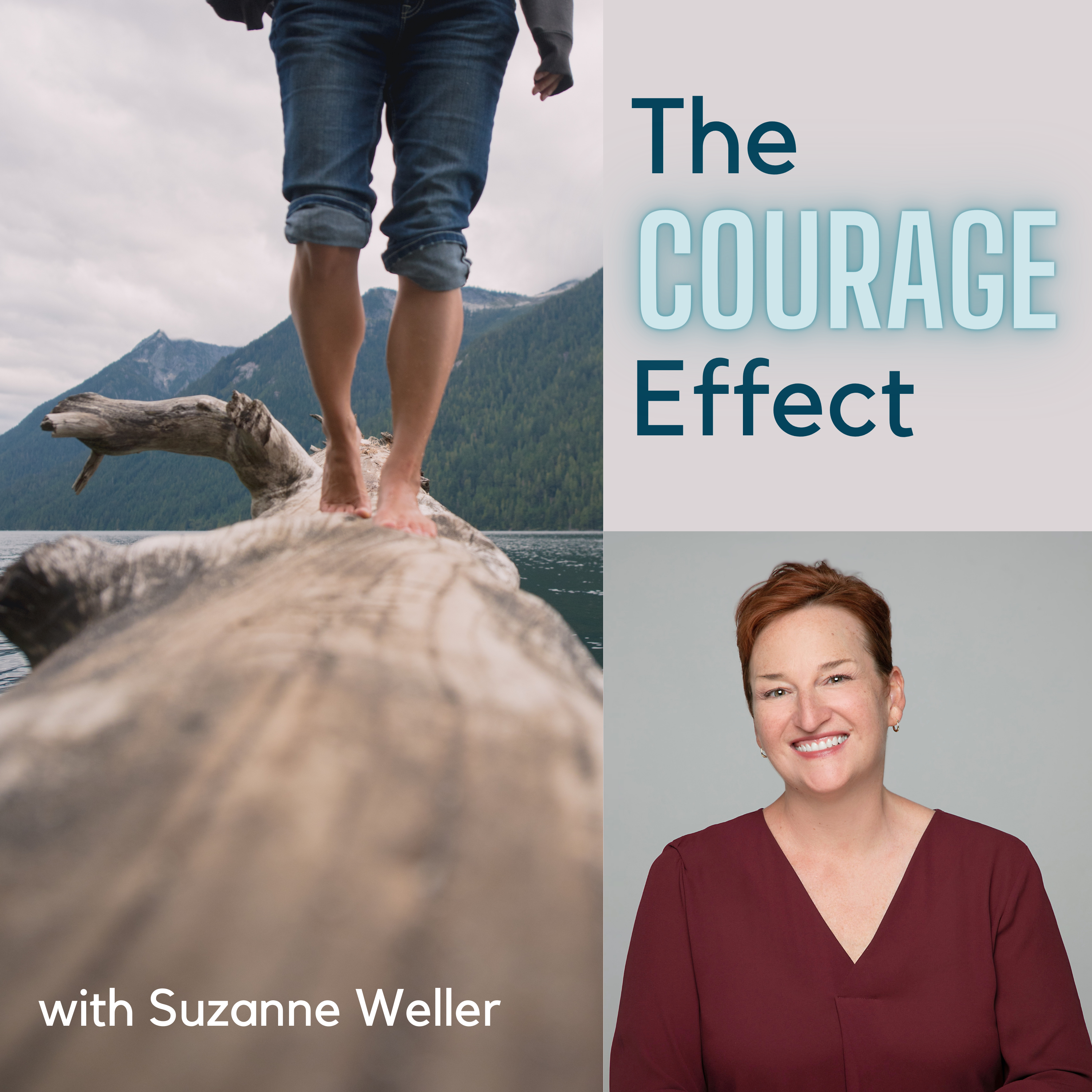
What Do You Know To Be True?
"What Do You Know To Be True?" is a series of conversations with ordinary people about their extraordinary talent and the meaningful impact it has on others. The invitation is to be inspired to discover your superpower, unlock your potential and possibilities, and make meaningful impact in the world.
The journey to unlocking one’s potential and possibilities includes a discovery and deepening of understanding of the building blocks of human potential: purpose, joy, hope, adaptability, well-bring, courage, and community.
Our host, Roger Kastner, seeks to discover more about our guests' path to discover their superpower and unlocking their potential by exploring their journey and the insights and wisdom they learned along the way.
The goal of these conversations is not to try to emulate it or “hack” our way to a new talent. Instead, these conversations are meant to help us think deeply about our own special talents, how we discovered them, why we continue to develop them, and what it’s like to use them to create meaningful impact in service of others.
This podcast is for people leaders, coaches, org development practitioners, mentors, and anyone who works with other people in their pursuit of unlocking their potential and achieving more.
Our guests bring humility, vulnerability, gratitude, and humor as they delve deep into their experiences and share their insights and wisdom. A common thread in these conversations is how our guest use empathy, curiosity, and connection to amplify the impact of their superpowers. They are ordinary people, with extraordinary talent, who make a meaningful impact in our world.
Enjoy the conversations!
#DiscoverYourSuperpower #UnlockYourPotential #MakeMeaningfulImpact
What Do You Know To Be True?
These Frameworks Are So Powerful, People and Teams Thrive | Insights from Roger Kastner
In this conversation, Roger Kastner shares how he discovered his superpower for finding and creating simple frameworks, how that helps him unlock his potential and possibilities, and how it enables him to work with individuals and teams thrive at work and make meaningful impact in the world.
Undoubtedly you use frameworks for getting stuff done at work, at school, and at home. But what do you do if your frameworks no longer work for you?
If you are like me, you look for something better or you create your own.
And the frameworks that I used, whether I found them or created them, have enabled me to amplify and live into my purpose.
To celebrate the 2nd anniversary of the What Do You Know To Be True? podcast, I take a turn as a guest to talk about my superpower, Creating and Sharing Simple Frameworks. Friends of the podcast, Liv Olson and April McCormick both suggested the idea a few weeks apart, and I’m pretty good at noticing patterns, so I went with it.
And April, who is a wonderful Leadership Coach and talented host of the “Uncomfortable Friend” podcast, offered to host this episode. She does a fantastic job, I’m so grateful to her!
In the episode I share a handful of frameworks…
1️⃣ Those I’ve created
(Like the one I wrote about in my book, “The Project Success Checklist” or the framework that is the foundation for the podcast)
2️⃣ My “go to” framework for helping leaders assess employees’ responses to change
3️⃣ My favorite framework that I’ve used on almost every initiative in the last 20 years
I love to share these frameworks with colleagues. Whether I created them or not, these frameworks help me live into my purpose.
And like most people that I’ve interviewed for the podcast, my superpower didn’t come from a place of strength.
Instead, that talent started as a way to attend to an unmet need.
Spoiler alert: After doing 50+ podcast conversations, I’ve noticed a pattern in how superpowers have been developed. Boom: another framework.
In this episode, Roger answers the following questions:
➡️ How do I use a framework?
➡️ What frameworks are used in business and problem solving?
➡️ How do I create a framework?
➡️ What does "framework" mean in simple terms?
Resources mentioned in the episode:
➡️ What Do You Know To Be True? podcast
➡️ Roger’s LinkedIn
➡️ Roger’s book “The Project Success Checklist”
➡️ April’s LinkedIn
➡️ April’s Uncomfortable Friend podcast
Music in this episode by Ian Kastner.
"What Do You Know To Be True?" is a series of conversations where I speak with interesting people about their special talent or superhero power and the meaningful impact it has on others. The intention is to learn more about their experience with their superhero power, so that we can learn something about the special talent in each of us which allows us to connect more deeply with our purpose and achieve our potential.
For more info about the podcast or to check out more episodes, go to:
What Do You Know To Be True?
"What Do You Know To Be True?" is hosted by Roger Kastner, is a production of Three Blue Pens, and is recorded on the ancestral lands of the Duwamish and Suquamish people. To discover the ancestral lands of the indigenous people whose land you may be on, go to: https://native-land.ca/
Keywords
#DiscoverYourSuperpower #UnlockYourPotential #UnlockYourPossibilities #MakeMeaningfulImpact
TRANSCRIPTS Simple Frameworks That Help People Thrive At Work - Roger Kastner
Keywords
#DiscoverYourSuperpower #UnlockYourPotential #UnlockYourPossibilities #MakeMeaningfulImpact
Roger: I am sure you use frameworks to help you get stuff done, but what do you do when those frameworks do not work? Have you tried creating your own? Some might wonder why would you create your own when there's so many models that are just a Google search away, and yet if you're like me, perhaps you're impatient with the available frameworks that are too complicated or you found that they just don't work.
I think about the quote that's attributed to the British statistician George Box who said, all models are wrong, but some are useful. All frameworks do have their limitations. So I say if the old ones don't work, make your own. Throughout my career, I've used and created my own frameworks and the ones I found that do work, I love to share them with other people.
In fact. This podcast is an example of a framework of how ordinary people use their extraordinary talents to tap into their possibilities and potential so that they can create meaningful impact in the world. So a better question might be, why do I create my own frameworks? I often tell people why I do what I do is, yes, I'm trying to create teams that can achieve business goals.
Ultimately what I care about is workplaces where people can thrive. 'cause if they can thrive there, they're gonna take that out into the world and help the world be a better, thriving place for all of us. That's beautiful. I love that. I don't wanna sound confident, I wanna sound like I'm actually helping people get to a place that they're trying to get to, and that that includes being, having to be a little inaccurate. The focus has shifted from, you know, I can be most valuable when I'm being helpful, not when I'm being right.
Now today's episode is a bit different. A while ago, my friends Lee Olson and April McCormick both suggested that I do an episode where we turn the tables and I'm the guest. I think partly because they wanted me to feel what it's like to be on the hot seat talking about my superpower.
But I think mainly it came from a place of. So to celebrate the second anniversary of this podcast, today's host is April McCormick. You'll recognize April as a previous guest on this podcast, and she is the talented host of the powerful. Uncomfortable friend podcasts. April will be helping me explore what I know to be true about using, creating and sharing simple frameworks, and maybe more importantly why I do it.
And in this episode, I share a handful of models that I have used or created, and I even share my favorite framework. While it's not one that I created, it is one that I've used on almost every project I've been a part of for the last 20 years. If you're ready. Let's dive in.
April: Welcome to What Do You Know to Be True, and I am April McCormick with your host. Roger Kasner, but today we get to turn the tables a little bit and I've asked Roger a while, for a while now, I think, what is your superpower? And today you're gonna get to, to face the music.
Roger: It's a pleasure to be here, April. Thank you for having me on.
April: I know you're so excited to talk about yourself, but I need to need to ask you what's important to know about Roger?
Roger: Well, first off, I'm a husband and a father. I am a parent to two new kittens, cheddar and, uh, Rumi. And I just realized I gave the name of the cats before of um, my, my human family.
So the lovely Miss Lara Lorenz, who some of you've heard about before. And then my son's Duncan and Ian for work. I am an org development practitioner, and if you've seen the movie office. Base, I'm basically one of the bobs, but for people and teams versus process. Um, I'm also a leadership coach and I'm a podcast host of this, uh, this wonderful podcast that I've, I've given the reins over to my buddy April today.
April: Well, that's very exciting. I'm curious, what is your superpower? What have you finally narrowed it down to? 'cause you've got so many wonderful talents.
Roger: One of my talents is being, um, being a smart Alec. And I found that I'm not, that's not just mine. There's other people. And so my good friend, April McCormick wanted to turn the tables on me, uh, in a very positive, generative way, um, to talk about my superpower.
And I think the, the best superpower to talk about is. Creating simple frameworks, what that means to me and what's where, uh, where I think it's a superpower is in all phases of the work that I do. In some of the volunteer work I've done, whether that's been a youth sports coach or working for a nonprofit on the board.
Um. Even all the way up to this podcast, in order to make sense of things and to have a loose framework to follow, I have either borrowed or created a simple framework that allows me to feel grounded, centered in what I'm doing. I think of it as the. The borders on a sand sandbox. The framework keeps the sand in and allows us to know, you know, it is the container for where we get to be creative, where we get to play, where we get to discover and explore things.
And so, um, I think it's those creative, they're creating those simple frameworks, um, is something that not only do I need, but that I'm pretty good at. Hmm.
April: Could you dive a little bit deeper with like your definition of framework? I like that sandbox, but what does that look like? And this is coming from a, a recovering engineer, right?
In the sense of like, are we looking at like a checklist? Are we looking at what are we looking at as far as, as how you define a framework?
Roger: It can be a checklist. In fact, I wrote a book about 10 years ago. Uh, about a checklist, and it was a process that I discovered, I'd like to say I discovered. For me, it was a discovery.
It was something that was new in the years followed, have found other people who use a similar framework. So obviously I didn't invent anything new, but it was just new to me early. Roger. Career was doing project management, and I had found that I was really, really proud of myself for nailing scope, schedule, budget.
Mm, that was the Holy Trinity of project management. As proud as I was of myself, I was equally disappointed that once we launched, no one cared. About scope, schedule, budget, what sponsors and stakeholders cared about was, are intended users, are they using the thing? Are they buying the thing? Are they consuming the thing?
And I'd be like, well, that's, uh, like, uh, that's someone else's deal. My thing is all about scope, schedule, budget. But success was actually. Defined by, was that product or service used? Was it loved? Was it bringing in revenue? And so I realized that the scope, schedule, budget thing, that simple framework, even though I was quite good at it, it's not what mattered, what mattered was success.
So I started going around and asking my sponsor stakeholders. What defines success here? What will make this project successful? And I'd get a lot of different answers. Child of the eighties, where David Letterman was so prominent, there was this idea of this top 10 list, and so I would always create the top 10 factors.
Uh, that led to success, scope, schedule, budget is important until you launch. So we would track that, but we would also take those top 10 critical success factors and we would put, make sure they were in scope, make sure we measured it. The converse of those items would go into our risk management plan. Um, and so it felt a little bit like cheating.
Like, we are gaming the system, but like, it shouldn't, like if these are the things, how we're defining success, let's do these things. And so I did that for a number of years and it, it came to be very valuable for my work. I started sharing it with the project managers that I was working with, um, at, at the consulting firm that I was at.
My clients would ask me to start putting together workshops and train their project managers on it. I then got the opportunity to teach at Bellevue College, and this was a course that I developed for Bellevue College. I then got to transfer to University of Washington and, and have it there, uh, as a, as an offering a part of their project management program.
And then, um, I thought, oh, you know, I should. Well, how about if I turn this into a book? And the marketing person at Slalom Consulting said, why don't you blog about this first? So I started blogging about it. At one point, I realized I had enough and I had enough words that I could throw it into a book. So actually wrote a book called the Project Success Checklist.
One of the things that I learned in that project success checklist, uh, experience was how important user adoption is career-wise. I started doing a lot more change management, which I think of change management as the gateway drug. Into organizational development, even in change management. Again, another simple framework that I continue to use today, Dr.
David Rock out of the Neuro Leadership Institute has, uh, some research that led him to this idea of the scarf model and the reasons why people either react to change in a threat or res or reward response is based on their status, how the change impacts their status, their level of certainty of how they do their role.
Their level of autonomy of do they get a say in what they do and the decisions they make, relatedness how they relate to the organization. The F is for fairness, you know, are these changes, do they perceive 'em as fair or not? I was gonna say that sounds just like a framework. Yeah, exactly. I didn't, that's not the one I created, but it's it.
It's one that works really well in coaching. As you know, there's certain frameworks we have our favorite questions that we like to ask at, at various times. Mm-hmm. I know you're. Favorite question is says who? My favorite question is, how is this big enough to matter? And I actually tell people who are coaching me asset.
Asset at the beginning and asset about two thirds of the way through the conversation. 'cause my answer will likely change. And it usually does. And in preparation for this conversation, I realized, oh, this, this whole podcast series that I've created is a framework. It's a relatively simple framework for how do people achieve their potential or their possible selves.
You know, I spent an afternoon, maybe just five minutes, really trying to think of like, what are those key components of potential? I've added a couple along the way. I started with five and I'm now up to seven. We'll see if it grows or maybe I can shrink it because you know, the smaller the number, the better you know, and if you're gonna write a book, you gotta have a number.
So, you know, right now it's seven. The seven Pillars of Potential will not be called that, but you know, that's the working title. But it started with, the first conversations I had was around purpose. Then we moved into Joy. Then originally it was gonna be agency, but now I've changed that one to hope and the definition of hope by Charles Snyder, the psychologist around a belief in your path, or I'm sorry, belief in your goals or attainable belief in your path to get there and belief in your capabilities to make change happen.
Fourth. Uh, the fourth element is adaptability, which is inclusive of learning, agility and resilience. So a little bit of mindset and the ability to. Change the knowledge that we have to learn, unlearn, and relearn. The fifth is about wellbeing. A lot of us spend too much time in our, in our, uh, on our mental side being, you know, working up in our head.
But we need to take care of our physical. We need to take care of our emotional and we need to take care of our spiritual. And so gonna have conversations with friends about that. And then this is something that you have been a big, um, hero in my eyes when it comes to. You know, this, this last, or the, the six, uh, pillar is around courage.
Because our, if our purpose is our North star, our joy is the fuel that helps us do this work and get out of this work. Um, hope that that, you know, belief and agency adaptability and our ability to learn and have the right man, well wellbeing and our ability to take care of our mental, emotional, physical, and spiritual self.
We can have all that dialed down. We're still gonna need to get into the arena at times that are outside of our comfort zone, and we might get our butts kicked. Yeah, I saw where you're going with that. Yeah. In fact, there's a high likelihood that we will get our butts kicked. Thank you. And that takes courage.
And so we still, we still need to figure out how do we build our courage? And, you know, I think a lot of that is, is through inspiration and through inspiring people like you. Now we can have all that together, but none of us achieve by ourselves. There is the team, the community, the family that supports us through that process.
And we have the ability to help other people achieve their possible selves, their potential. And I think that last piece, the community piece is really gonna be about how do we become a good community member? How do we become a good team mate? How do we become the best family member we can be? Seven pillars of highly possible people.
I don't know. Well, we're work, work in progress.
April: Well, I like it. And even though I'm a little sad that an agency chapter goes away, because I am a big believer in that, I like how it's at least not gone. It's, it's encapsulated into hope.
Roger: Yeah. And, and someone else was suggesting that change to the word trust.
Mm. Like, I have trust in my capabilities. I have trust in my path because even if we, like we're de, we're constantly developing our capabilities. We might start on a path, know, get a hero's journey referenced. We might start on our path, but that path can change and we still have trust or belief or hope that we will, we will be able to adjust to any turns or bends or surprises along the journey.
Yeah.
April: Yeah, that reminds me of another framework with the five dysfunctions of a team, right? And trust is that foundational, foundational step, right?
Roger: Mm-hmm.
April: So there. Mm-hmm. I just framework you as well, so that was really fun.
Roger: It's, it's contagious.
April: It is. And now that you've mentioned that this is your superpower, I've noticed now I'm thinking back to conversations that we've had and I'm like, I. I've seen that pattern over and over and over again. And so I'm like, how did I not clearly understand that? As, you know, it, it, it's fascinating.
So I love to get to know even more about you every time. So what or who inspired you to have the superpower of creating simple frameworks?
Roger: I, and I think this is why it, it has become something that I do just so naturally and, and sometimes annoyingly growing up, uh, we moved around every year. Oh wow. And every, every September we would be in a new town.
I'd be going to a new school and come June we would, we were mainly in California, but in start of June, um, once school was out, we'd drive to New York, uh, New York State to be with my dad's parents as a way of getting to know them. 'cause my dad didn't know his dad, um, up until he was 18. But the impact on me and my brother, who's three years older.
The impact was that we didn't have long-term friendships. We didn't have relationships that, um. That, that span, that school year. And so at the beginning of every school year, I would come in and I think just, you know, the innate wisdom in me said, Hey, you gotta, you gotta understand this landscape very well and you gotta be able to understand how to fit in, um, from a safety standpoint, from a social standpoint.
But also what was challenging for me is I had a speech impediment. I pronounced all my Rs as Ws. You know, not great that my name is Roger and my last name, there's an R at the end as well. And so like, I couldn't even pronounce my own name, so I had a little extra hurdle there. The, the sort of story I was telling myself then was that, you know, where people weren't accepting me for who I was.
Because I was the new kid, because I was outside of their group. Because I had this funny way of talking that I had to prove myself, that I had to prove my value, my worth. And I think there's a part of me that was questioning that as well. 'cause everyone else was questioning it. Why wouldn't I do that as well?
And so I think this, this desire to find the frameworks to help fit in. To understand, like, what does it take to actually fit in and, and befriend people, um, was really important. There's a story that I've been living with and a, like a groove and a record that I've been, uh, stuck on about this need to prove my value and my worthiness to other people.
Um, that has got me to a place where, you know, some of the, just the patterns in my life. A, a good friend sent me this little clip of Brene Brown. Where Brene says, do not go searching for evidence of your worth because you will find evidence that you're not worthy. Do not go searching for evidence that you belong 'cause you will find evidence you do not belong.
Do not negotiate those things that you can find internally. And that was a game changer for me. Simple framework, uh, that someone shared with me. Simple phrase. Um. That that hit me at the right time to realize the truth of the matter is I was probably always questioning myself if I was worthy and. I would look for that answer to come from external sources when I should have been talking to myself all along For 18 years.
I was an external consultant where every three to six months I would have a new, new client, new client team, and I'd have to come in and help them solve some big problems at the very beginning. And that kind of feels like the young Roger going into a new school, a new school year. Yeah, minus the speech impediment, but occasionally I mispronounce words or a lot of times I mispronounce words.
But anyway, it, those patterns are very familiar with me and so, you know, why not? Why not find the frameworks that help me? Prove value in a very short amount of time.
April: You know, I love that story because as we were just talking about before, we were really getting into the start of this, a lot of the times our superpower becomes something that we have used to overcome significant challenges in our life and.
Not all of those challenges might rise to the occasion, right? We might not choose to follow those paths. Um, it's absolutely beautiful to hear you talk about that and from those challenges, it makes me then wonder what is the relationship between creating simple frameworks and joy if it's spurred from something that was a challenge.
Roger: I think joy comes through a couple things. One, um, being able to deliver value to other people. Uh, there's something, there's something, you know, that comes out of a place of need for me to do that, but there's also something really cool about being a help, being able to help other people achieve something they weren't able to do before.
And now as, as an internal consultant when I was an external consultant, walking into some really difficult situations, some really. Yeah, just tough dynamics and do a couple simple things when I'm able to help teams. Go into that space of difficult dynamics that are based on, you know, personal histories and personal challenges that, you know, could be, you know, uh, 12 months old.
12 years old. And through the use of these simple frameworks to create clarity of what they're trying to achieve, and. Good looks like to co-create solutions that help them, um, not only come up with good solutions, but roll them out and have ownership with those solutions and then ultimately build better connections.
You were mentioning the five dysfunctions of the team. Absolutely. Like can they build trust? Can they build the ability to have conflict? Let's talk about that word accountability and what does that mean? Because I guarantee you any room we go into. They don't have a definition of accountability yet.
Everyone talks about that word and they, they think about it differently based on their experience. Um, if we can talk about those things, then we're gonna, you know, we're gonna have a new framework for how we're gonna work together, and the teams are just gonna perform better. And so the thing I love is after an engagement where the client says, thank you.
You helped us do something hard, and you helped us think differently about it. You know, my, my, my heart grows two sizes at that point. It feels good. Yeah, it feels really good. And it's not, it's not something I did for me, but it's something I did in service of other people. And I know that they're gonna have a better working engagement, a better working environment afterwards.
And I do this work because ultimately if we're, if we're more fulfilled at work. If we're, you know, in our zone of genius, if we're working well with other people, if we're able to achieve the thing that we're, I mean, the reason why we actually took that job and work for that company in the first place, if we're able to be in flow and work well together, those people are gonna leave the office more fulfilled, more a sense of meaning and purpose.
And guess what? They're gonna be on the freeway. They're gonna be in the community, in the neighborhood. They're gonna go home to their families, and if they're like radiating positivity at that place, it's gonna be a better world for all of us. Yeah. And so I often tell people why I do what I do is, yes, I'm trying to create teams that can achieve business goals.
Um, but ultimately what I care about is workplaces where people can thrive. 'cause if they can thrive there, they're gonna take that out into the world and help the world be a better, thriving place for all of us. It's beautiful. I love that.
April: Ugh. And I love how that really centers on the whole person. Right.
It breaks down the, the previous notion of you need to be somebody different inside and outside of work. Mm-hmm. So, Roger, what do you know to be true about. Creating simple frameworks. Do you remember the candy?
Roger: The a hundred a hundred grand bar? Yeah,
April: it's
Roger: one of my favorites. Yeah, the be that, that was so good.
In Halloween, when you're going and knock on a door and you see that red wrapper, the, my kids don't like them,
April: so that's my parent tax. Yeah, I know. Crazy. I don't know. They're into the sour gummy things, you know, so I'm like, I'll take the a hundred grand. It's fine.
Roger: Yeah, no, it's, it's, it's nice, nice to sacrifice your yourself that way.
You know, the, the best part about that bar is not the hard outside. It's the chewy, chewy goodness on the inside, and the interaction with that hard side. I think of that as using, using these simple frameworks to give us, you know, to give that, that that border on the sandbox, you know, to give us those boundaries and guide us in a certain direction that then allows humanity to enter the conversation, then allows our vulnerability and our innovative and creative self to come in.
Um. The, the framework just makes sure, like, Hey, yes, we're going in the right direction. We're checking off these boxes, but now let's, let's really pour ourselves into that center The need to, to use, um, the, the, the simple frameworks coming out of my need to feel valued, um, definitely, definitely is, is true for me.
And yet, even though that comes from a, a, maybe a place of, you know, some sadness there. The ability to help people show up in their true, authentic selves and to do very creative work that's close to their purpose, to where they get meaning from that it's, it's magical. Um, I'm trying to think of the right word.
I mean, a strong value for me is liberation and liberating from the status quo, from the mundane, from the, just the bureaucratic. BS that we have to deal with in workplaces, if we can set that stuff aside and help people get to the real reason why they do the thing they do, so they could get into flow, so they could get into their zone of genius.
All those buzzwords come to the front when we. Use those simple frameworks. That's, that's just delicious.
April: That's beautiful. I, it's breaking me into so many other pieces. 'cause I'm like, boy, I wanna just pick your brain as a fellow person in corporate America right now.
Roger: It's funny because for me, someone who's done this time and time again, there's part of me that's like, uh, are they gonna, are they gonna figure out that it's a simple framework and they don't actually need me?
April: Do you ever find yourself also. Just disappointed with the fact that more people don't know about this framework and don't operate to this framework because it feels like we're not learning our lesson as, as humanity.
Roger: That actually fuels the second half of the creative, of, of the, of creating simple frameworks is the sharing of them.
I love spending time sharing the frameworks with people. I love showing how I do the magic. Um, and with the intention that they're gonna go off and do it themselves. They can now, you know, they're now capable of pulling a quarter out of someone's ear because. I know that will have more ripple effects if my, if my goal is to create a better world, if my goal, my purpose statement is I'm unlocking my potential when I'm unlocking other people's potential.
And if they have the, you know, if other people can help other people unlock their potential. It's just the ripple effect,
April: you know, for all of those that are thinking that everything feels so negative nowadays. It makes me feel really wonderful that there are other folks that are. Looking at these as the opportunities to make a, a positive impact.
And I do think that those ripples last much, much longer than you'll probably ever know. Thank you for that.
Roger: I, I, I, I can receive that. Um, the disappointment. That I feel, I think right now, and this has been a real focus for the last several episodes around joy and how to access joy because we're hearing, you know, for so many people how joy is hard right now.
And yes, things, you know, the world is, is definitely, it's a little harder to process. There's a lot of things going on that we wish weren't so, and when we are not. Able to access joy when we're not able to have positive, um, emotions. Um, it, it, it has an infectious, viral impact on the rest of us. Right. And, you know, there's something.
There's something so powerful, like, and you, and I've talked about this before around like I'll go around and ask people like, Hey, what's sparking joy? And you know, I, no one has said nothing, which is good. But the beautiful thing about when they respond to that question is they're showing their values.
The things that spark joy is connected to their values. So once you learn that, then you could keep talking about that thing and the next time you see 'em and the next time you keep bringing that up. So there's an element of, you know, where people, um, are maybe unaware of how they access joy and what can spark joy for them.
Um, I wish more people knew that. So that's one part of the disappointment. Another form of disappointment I find is when I'm working with teams. And we talk about what's the total potential, the final decisions that they make is somewhat short. Of that full definition and therefore, um, you know, maybe they only get 80% to their potential or 90% of the way to their potential.
And I'm like, oh, you could have got that extra 10% and then I have to just stop and like, okay, where, what have they achieved? What have they achieved? Where were they when I started with them? Before we started these conversations? You know, one of the things I have to remind myself, and I should probably do this for myself as well.
Yeah. But with the teams that I'm working on, like keeping a checklist of, okay, this is what, you know, oh, we got, we did something new today that we didn't do before. We were able to now do this that we weren't able to do two months ago. There's a little bit of, you know, how to address that disappointment.
But it still comes up. It still comes up, you know. When, when we, we've seen what's, what's possible and we didn't get it this time. Doesn't mean we can't get in the, in the future, but yeah, there's, there's, there's a little bit of that.
April: What did you believe early on about your superpower that you've now come to learn is not true?
I
Roger: think I was doing it 'cause I was looking for shortcuts and for a lot of these things, the formal training came after. I had been doing that thing for a while and, and maybe that's pretty typical, but like when I got my, my. Project management professional certification. Um, I'd been doing project management enough that I'm sitting there and just calling BS on all the stuff I had to say that I knew, uh, to pass the exam.
April: Mm-hmm.
Roger: Um, and become certified and then realize. Oh, no, that's, that's, that's not how you're supposed to do it. Case and point, that's not
April: how it works in the real world. Yeah. Yeah. So I, I
Roger: got certified in 2003, which, you know, it's been a minute, but at that point in time, the PMP asked, oh, what do you do when something goes wrong?
And the response is, you document the corrective actions you take. Oh, so you go fix it and you write down what you did. That's not helping me. That's not helping me self solve problems, just write down what I decide what to do. And so I got really curious about, okay, how do you do problem solving? And at that time I was working for a, a consulting firm with 500 consultants and I thought, oh, you know, all we do every day is solve problems, search.
Gotta be someone here that has a framework. Heck, there's probably like three or four people that have a repeatable framework that they use every time to solve a problem. At that time, I was the project management solution lead for the firm, and I was putting on monthly workshops where we were adding new skills to everyone's toolkit.
So I had put in a newsletter, the request for a, Hey, you guys are solving problems all the time. What's a framework you use? I'd love to put together a workshop where we like do a survey of two or three of these methodologies and then you can pick which one you want to use. You know, that thing goes out on a Friday afternoon, and when I turned on the laptop on Monday, I was hoping for, you know, a great response rate, much better than um, what I actually did receive, which was zero.
I got baked on it, no one responded. So then I thought, okay, I'm gonna ask. A dozen consultants that I know who do this really well, I'm gonna send them individual emails. 'cause that's gonna, you know, it's, it's harder to hide when you send the individual email and I got three people to respond back. So that's a much better response rate.
But two people said they make it up as they go every time. And then one person wrote about 5,000 words. And to this day, I never read what they said because if it's 5,000 words, it ain't repeatable. So then I go on the interwebs and I type in problem solving process, and I get this creative problem solving process trademarked 1956 by Dr.
Sidney Pars and Alex Osborne. And Alex Osborne is one of these. Madison Avenue Mad Men, who is also, uh, is attributed with creating, brainstorming and this process, this problem solving process. Six steps of, of how do you go about solving a problem? And the first step. Is identifying what does good look like at the end when you've solved this?
What does good look like in their, in their language's? Objective finding. The second step is fact finding. What's all the data we know about this problem? The third step is problem finding, which we also refer to as writing down what's the problem statement. Which, how many times do we start off with what the problem statement is at the very beginning?
I think we do that half the time. We're usually trying to solve it before we even understand the problem, for sure. And the pitfalls that we run into when we try to do problem solving. The first one is we jump to conclusions. The second one is, we solve for symptoms and not roots. Then the third is, if you're looking at it from this angle, and I'm looking at it from this angle, we're seeing things differently and we don't share that.
But if we follow just these first three steps of what does good look like, the second of what do we know about this? And we get to share those perspectives. So we have a 360 view of the problem, and then what's the problem we're trying to solve? And we all agree to that. We can't run into those. Those pitfalls.
The fourth one is brainstorming. Thank you, Alex Osborne. The fourth one is picking. Cool. The fifth one is implement and validate. There's six ones, sorry. So like six simple steps. To this day when I'm coming up with, whether I'm writing proposals for projects or building out schedules, I follow those same six framework, those same six steps.
And I love sharing that one because most of us don't have a framework for problem solving. Most of us do jump to conclusions, I think. I think what's really happening is we get a, we get a solution that solves a problem, and then we think a lot of other problems fit that same initial problem and they don't, and we haven't spent the time to validate that it will or it won't.
April: Oh, but how come you're not sharing best practices across the Uh, that's the thing about best practices that sometimes I have a hard time with. I think I'd like it better though if it was said as like, Hey, frameworks that I think is a way better way of describing the tools, techniques you can utilize as opposed to best practices.
Roger: I like the phrase Better practices. Better practices.
April: Well, first off, I love hearing the shift of your. Your energy when you're talking about this, right? Like you can, I can just tell your passion and obviously you speak very eloquently about it and probably with all that practice of it, it comes across very well.
Roger: I would make for a horrible poker player.
April: Hmm, same. That's probably why I enjoy you. Um, so now that you know all of this, right, what's next for you and your superpower?
Roger: I have started to share some of the knowledge that I've picked up along the way of with this podcast. So this year I have had three speaking engagements, uh, where I've been able to talk about what I've learned.
From these podcasts. Um, and so that speaks to unlock the potential of others. And so being able to share it, um, not only through this podcast, but then through those speaking engagements, I think ultimately there's gonna be some kind of learning experience that I'm gonna be creating, um, through this knowledge I'm learning firsthand from talking to, you know, wise and.
Amazing people like yourself receiving some of those things that you've learned and applying it to, to what I do and then turning around and sharing it with other people. And I'm able to do that through the podcast, but I wanna come up with a way where there's a much more rich, meaningful experience and community where we're able to to, to do that.
So that's, that's. I think the public speaking engagements I'm doing now is helping me get there. Coaching, I think, is also a part of this, and I just recently started a new program where I'm learning how to do internal family systems work. In coaching the Dick Schwartz work on, on, on parts and bringing that into the coaching conversation seems very, very important, um, and very valuable.
So I'm excited about that.
April: And I noticed the framework within there, right? It's about sharing knowledge, continuing to build that knowledge, and then to evolve that knowledge into, again, leaning into your purpose. Which, yes, it feels very much like creating simple frameworks, but it's really about, I think.
Investing in people and organizations.
Roger: Yeah. This ability to not only live into my purpose, but to help people be able to get inspired to live into their purpose, that, that feels meaningful for me. So I'm, I'm, I'm very grateful I found this and I'm in this space right now.
April: Roger, are you ready for the lightning round?
No.
Roger: Yes, and and I, I violate the rules. There's no rules, but I violate the rules of the lightning round every time because I ask follow up questions I, I'm going to as well, or ask new questions. Okay. I was gonna say, I was gonna try to keep on track like I'm not doing right now, but anyway. Let's proceed.
Alright, so you'll do your best. I'll Yeah. But mm-hmm. Again, this is the simple framework to allow the magic to happen in the middle. Yeah.
April: Creating simple frameworks is empowering, I mean, one word. Look at you right to the point. No, I'm, I'm trying. I'm trying and yeah. All right. Who in your life demonstrates creating simple frameworks for you?
I've got nothing on this one. That's really interesting. Yeah. I know you're gonna be ruminating about this after.
Roger: Yeah. There might be like some weird dub in answer later on when I'm like my mom.
April: Is there a practice routine, uh, or a routine that helps you grow, nurture, or renew your ability to create simple frameworks? And this feels a good question around creating simple frameworks. By the way, when you were describing your simple power at the beginning, and I'm like, this question is the framework around that, and I'm like, I had that aha moment.
So what's your framework for continuing to create simple frameworks?
Roger: I love that. Um, when I can't, when I, when I don't know how to do something, I go to the Google. And actually lately it's been more YouTube, um, where I, I like the breadth of, of different ways of trying to learn how to do something. Um, ai, I'm not a, I.
I've had very mixed results using AI to try to help, uh, find new frameworks only because I keep find, I keep running into hallucinations, as an example. Lightning round violation as an example. Yeah. Yeah. No. What's this hallucination? Now I'm curious. So I, um, back in February I did a Leading with Heart presentation to the local A CMP Association for Change Management Professionals, uh, chapter.
I know that leaders have a hard time leading with heart. They lead a lot with head. They move through the change curve much faster than the rest of us. And I'm like, okay, what does the science say about this? And so I went to, you know, your friendly ai and I asked like, Hey, what, like, show me some research.
And it, it gave me a few things. And one of 'em was a phrase called. Empathetic blindness as a thing that Amy Edmondson created and it, it had the links to the source. And so I'm like, okay, cool. Like, uh, I've heard of psychological safety from Amy Edmondson, but this, you know, this is probably like a chapter in her book.
I love it. I was, as I was preparing, I shared, uh, did a little practice session with a friend and he was like, everything's great, except for that Amy Edmondson quote. I've read all her stuff. She never puts those two words together. I'm like, no, no, no, no, no. You should, you should. You know, here's my chat GPT response.
Here's the link. And he is like, yeah, you, you should go look at that article 'cause she doesn't say that. So then I go look through the article. I read the article. Uh, yeah, E Empathy Blindness does not show up in that article. So I, I go back to chat GPT and I'm like, show me where you found this. And it gives like two more articles go and look.
It's not there. Go back to chat GPT again. I'm like, are you hallucinating on this? And it says, yes, sorry, bro. It's online searches. And then occasionally I'll see someone do something at work, um, whether it's a colleague or a, you know, maybe even another consultant. And it's like. Oh, that's cool. That's, that's going into the toolkit as well.
April: Is there a book or a movie that you recently consumed and would recommend that has creating simple frameworks as a theme?
Roger: These are great questions. Um, the TV show shrinking. Oh yeah, comes to mind. Where for those who haven't seen it, you know, the main character just gets tired of not having more breakthroughs, uh, not having as clients have more breakthroughs and feeling very limited by the constraints.
Of the, the whole body of work that is psychology. And so he starts, you know, he goes rogue and starts doing things that he's been told not to do, and he has good results and bad results. Um, to some extent it feels at this point in time when everyone's looking for mental health, um, professionals in one way or another, and just anything to help people get through the day, it feels a little like.
Irresponsible to be talking about rogue psychology, but I think there's something in that around like, okay, we have these very complex frameworks, probably for some really good reasons, like when it comes to taking care of other people's mental health, but in some places I think we're using frameworks or following rules that need to be questioned.
And, you know, people are looking for more complexity. The, you know, we have complex problems and therefore we need complex frameworks. And I think that's taking the humanity in people's experience out of the equation. In some places that might be really good and, and in valuable in most places, probably not.
We probably need to tap into the wisdom that is in the room and not on the PowerPoint slide.
April: What is one thing that gets in your way of creating simple frameworks? Just like for
Roger: this podcast, there's a little bit of going back to those seven pillars, like, okay, are there other pillars? Like, what if I got this wrong?
Like what if it's what if? What if? I'm like not understanding one of these just right. What if blah, blah, blah, blah, blah. And fortunately I'm at the place where like this is, I'm, I'm, I'm accepting that this is a hypothesis. It's not even a theory, it's a hypothesis, and I'm out collecting data and I'm tapping into the wisdom of others.
To help me understand whether or not these things are true, eh, that might be the reason why it's called us. Yeah. Uh, even that title, there's a little bit of tongue in cheek because I, I actually don't believe there are any truths. I just believe there's people's experiences and, and embracing the impermanence of those, the things that they believe to be true, that it will change over time.
And so the frameworks that might work. Today might not work tomorrow. Um, or maybe there's even a better way of doing something. But I do think there's a limitation to how much the framework can help.
April: And I see that, 'cause you brought that up earlier on in our conversation around sometimes you wanna add to the complexity of the framework and thinking that we'll solve it.
And there's that people heart aspect of it. You know, there's 50% process, 50% people, and that creates the, you can't, you can't framework yourself out of people.
Roger: Right. And yet we try to do that all the time. 'cause all the time people are, oh people. I think it's, it's more complex because of the people, but it's also more beautiful and it's more powerful because of the people you know.
I think it's really easy to create complex solutions to complex problems. It's a little bit of the Albert Einstein. Uh, quote around, you know, you can't use the same thinking that got you into the problem to solve, you solve the problem for you to
April: get you out of it. Yeah, yeah, yeah.
Roger: But I do think, I think simplicity is a lot harder than complexity.
I think we can create complex systems very easily when maybe if we applied a simple solution at the very beginning, we wouldn't be into the complex problems. Maybe we would, maybe we want it. Um, and I think that's true with, with, with problem solving or doing the kind of initiative work that we do. We have, we have complex problems and I don't think the solution is another complex solution.
It's a simple solution that really solves for. All, all elements of the problem.
April: Well, those are all of your questions. You ready for some of my questions? Bonus session. Let's do this bonus session, bonus content. Um, throughout our interview. I've heard it. We we're, it's, it's I think, natural to apply frameworks and whatnot to that of business or our, our work and what we do there.
Do you have any frameworks for family? Ugh.
Roger: My wife will jokingly, especially when we were doing, when I was in project management, would, would sort of joke like, do not bring that project management voodoo in the house. And yet, um, I have used a weighted scorecard, uh, when we have been car shopping. Um, are you familiar with PERT estimating?
Yes, I am. Uh, so I've used per estimating, those who do not know per estimating is really trying to find the most likely time it's gonna take to do a task, problem solving process. Um, I won't break out PowerPoint slides. I've learned from past mistakes at home. But, you know, the problem solving process as well of trying to understand what does good look like and what do we know about the problem before we even define it,
April: is there a word or phrase?
That is helpful for you if and when you find yourself needing to blow off steam.
Roger: I go two different places with this one, it's like the James Lipton inside the actor's studio. What's your favorite curse word? Yeah. Uh, so there's that angle. The other angle I go with it is, you know, frustration tells you something.
Mm-hmm. And this is definitely the older Roger of like, what, you know, frustration's telling me something. And what I'm learning to be true is the thing that frustrates me about someone else. It's actually frustrating me about me. Let's look inside about why is this thing frustrating me and what, what is it about me that's frustrating me in this situation?
April: But what
Roger: is also your favorite curse word without saying it. It starts with an M. Somewhere in the middle there's an F ends with an R.
April: Mine too. It's the best.
Roger: It's the, why is it
April: so like it's so. I don't know, but yeah, I'm right there with you. That's so funny. Following along with that, like inside the actor studio kind of thought process, is there a word or sound that a team will make when you finally watch that light bulb go off where they've like hit the precipice of being able to move into the solving of their issue?
Roger: There's a moment in every workshop. Where I will ask a question or make a se or make a statement, and there's a, it feels like, you know, a minute or two of silence. It's probably only 10 seconds, but it feels like a very pregnant pause. Um, and someone will say, that's interesting. I've never thought about it that way, or, that's good.
Just, just two weeks ago. I'm in, I'm working with a team and we're, we're doing our org design stuff, and we had, we'd done, we'd done stakeholder interviews and we'd shared the themes. And one of the things I like to do is another simple framework. I call it this or that, but you can find it on, um, Wikipedia under the title.
Semantic differential that's looking at two pairings or a pairing of positive outcomes. And you choose like, which one do you, would you rather have than the other? And so we, we do the interviews, we do the this or that. And in listening to people. Just talk about what they're talking about. We didn't have time to come up to do an exercise around building their vision, but just listening to them talk.
I, I just went into my little template of, you know, your vision. Like this team exists too. We do this by, so that, like those are the three prompts and I just write it out and I'd be like, Hey, we have an extra 10 minutes here. I want to get your response to this. I put it up on the board. Um, and there's that.
Ten second pregnant pause, and I'm asking for feedback. I'm asking people to, you know, like, let's edit this. This is, this is the Ann Lamont shitty first draft. And everyone just says, no, that's it, that's it. And I'm like, it's not Ed. It can't be it. It's the first go around. It's me. I don't, you know, all I did was listen to you guys.
And they then spent the next half an hour defending it and the next day when the leader went to announce. Um, there some changes in the organization. At the very bottom, she said, this is the, this is in service to our vision of, she had that first sentence there that,
April: that was amazing. Something that I've known to be true about you is that you have, um.
Not just listening. I can't, I don't even wanna call it a listen, a power for listening, but it's really this, it's this, I think I initially called it like listening for comprehension, but it's really for like understanding, like really understanding, right? Like it, you'll ask the questions, you'll continue to ask the questions until you, until we've, you've gotten to the point where you're understanding the context behind what the person is saying.
That listening, how did that hit you? When I first. Said that to you.
Roger: People who've known me for a while will say, and I'll say it too, this is a new skill. Yeah. It, it, it truly is. And I, I, I credit the coaching program and just going through that experience of getting better at listening, but listening differently.
I think before when I was listening to people. It was listening to try to come up with, okay, what's the right solution or what's the smart thing I can say based on what they just said, and it was really without intention of how does I, how does Roger look smart here? How does Roger look helpful? And now, now it's like, oh, I, I kind of wanna be wrong.
I kind of not wanna get it totally right, because if they can take what I said and make it 10% better, 20% better, I know it's much more likely to be their thing. Yeah. Versus what the facilitator came up with. So I think I'm a little bit more comfortable with putting something out there and having it be wrong, whereas the younger Roger would just feel, um, would just, you know, feel, feel devastated.
You know, it's funny when you, how you remember certain things that people told you. I once had a client tell me, you sound very confident about that thing. I don't know if that thing is right, but you sound very confident. And I remember leaving that room thinking, oh, awesome. They recognized me. As you know, that, that was good.
That was great. And then ultimately underlying that is the backhanded compliment of like, you could be talking out your butt, but you sound very, very confident about it. And you know that I, I remind myself of that, I think because I don't wanna sound. Confident. I wanna sound like I'm actually helping people get to a place that they're trying to get to.
Um, and that that includes being, having to be a little inaccurate. The focus has shifted from, you know, I can be most valuable when I'm being helpful, not when I'm being right.
April: So Roger, I'm so sad that our time has ended in this, in this wonderful thing. If people wanted to reach out and they wanted to find you, how could they do that?
Roger: Well, the first place to go to is what do you know to be true.com. I know I could have come up with a shorter name. You know, the W-D-T-B-T blah blah blah wasn't a great, um, wasn't very much shorter anyway, but what do you know to be true.com? Um, I could be found on LinkedIn at Roger Kassner, and that's probably the, the two best places to find out.
The podcast is available on all the platforms. So you go to YouTube or Spotify and, and just type in again, kinda long, what do you know to be true? But I'm pretty sure someone would, will put all these links in the show notes, so you could just click, click the link there. Um, but yeah, those are the, the best places to find me.
April: Excellent. Thank you so much.
Roger: It is been a pleasure. It's been so fun. I loved when you suggested this idea April of putting me in this side, and it is much more, it's much more difficult to be on this side. I fully appreciate that and own that, and it'll make me, um, more empathetic, uh, when I have guests who might, you know, start off a little, a little nervous.
But you know, with a, with a great host like you, how it's really hard not to be comfortable throughout the whole process. You did a great job standing in for that other guy. Thank you very much. And as always, love you mean it.
Thank you all for being in this conversation with April and me, and thank you April, for doing such a great job of hosting this episode. The question I'm asking myself now of the frameworks that I'm currently using. Which one is ready for an update? What do you know to be true is a three Blue Pens production and most times, I'm your host Roger Kassner.
We are recording on the ancestral lands of the Duwamish and Suquamish people to discover the ancestral lands of the indigenous people whose land you may be on. Go to native hyphen lands.ca. Okay. Be well my friends, and as always, love you mean it.

Podcasts we love
Check out these other fine podcasts recommended by us, not an algorithm.

Wiser Than Me with Julia Louis-Dreyfus
Lemonada Media
Hidden Brain
Hidden Brain, Shankar Vedantam
On Being
On Being Studios
The Sum of Us
Higher Ground
Finding Mastery with Dr. Michael Gervais
Dr. Michael Gervais
Uncomfortable Friend
April McCormick